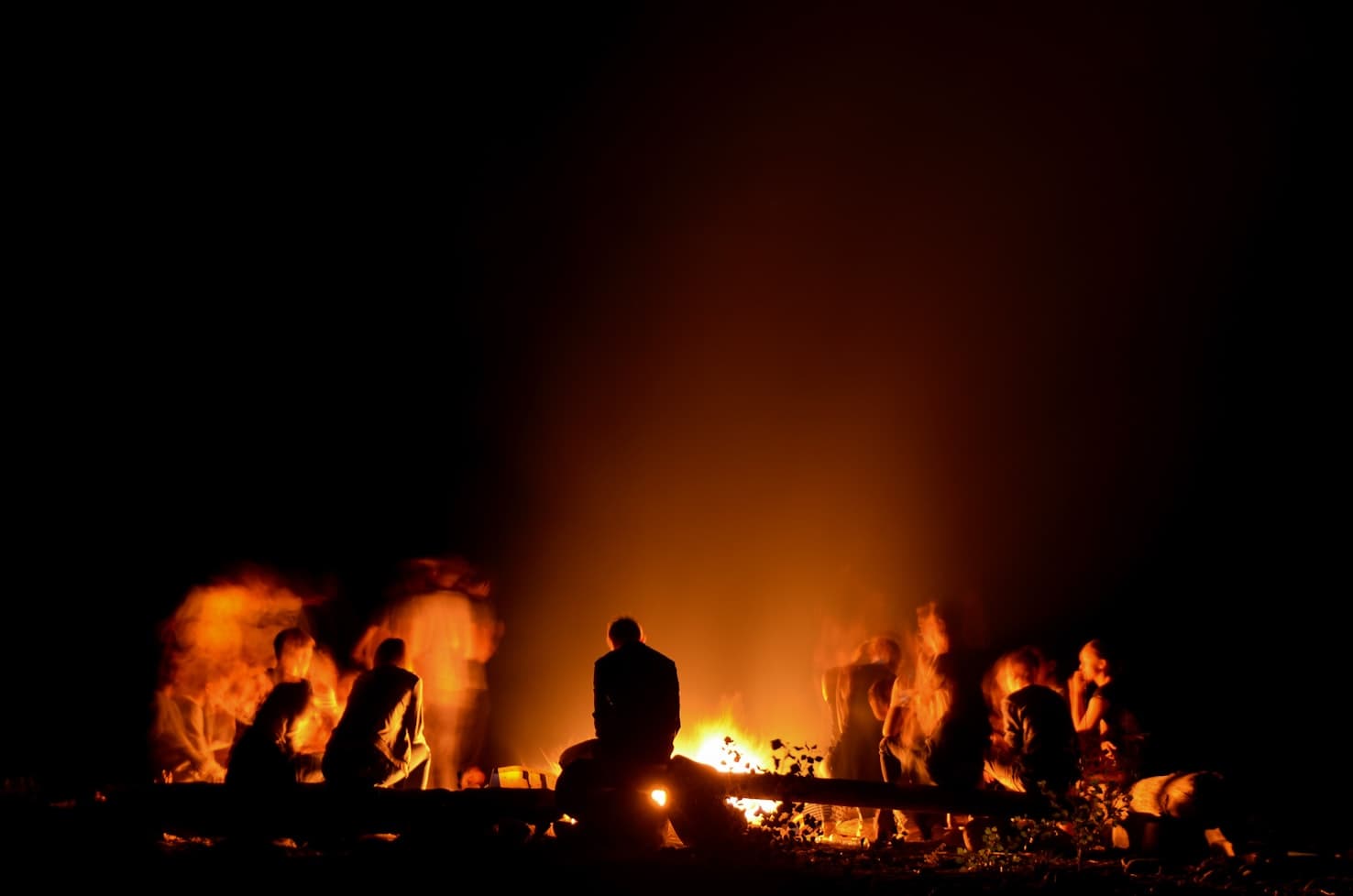
Our friend Kat has described worships, or reflections, as "making room for the numinous; and taking time to connect to something bigger than ourselves, even if that's just the community at large."
Our friend Juki has described them as:
"a moment to quiet things down, connect and reflect. And I really emphasize that it can be whatever you want it to be. For some people it's religious, for some people it's spiritual, for some peoiple it's just a moment to get grounded/connected/thoughtful.
Before I found this community I would not be inclined probably to think of myself as a spiritual person.
As I write this there is an eruption of dicourse online about Jasmine Crockett running for the Senate in Texas. Controversially, she has been pro Israel and voted for funding Israel during the genocide in Gaza multiple times. Leftists have been pointing to her zionism is an unaccpetable redline, and liberals have attacked them as single issue voters who have been dividing the support for Democrats by even daring to make a critique. "Both options are going to be pro Israel, anyway."
That's a fundamentally spiritual question, the phrasing of which as liberals have put forward is pretty corrosive to the soul. "Should we accept the systemic murder and dispossession of an entire people because it's politically expedient to protect our own liberties?" The assumptions of which are unproven.
Our culture doesn't allow many spaces for healthy discussion of spiritual topics. The critique of organzied religion needs no repeating, but there are plenty of grifters with shallow ideas of "vibrational frequency" or "the divine feminine." The following is an example of a Worship or Reflection that was had at the conference last year, in an attempt portray the sort of culture we are trying to build when we say we're a community in a collective search of meaning.
- Gwendolyn Brooks
In the past twenty months of this genocide, I began talking with a lot of Palestinian Americans about what was happening. What I've found shocking is the more Muslims that I've spoken to, is the everyday practice of their religion. In Islam, there is the concept of the ummah, the brotherhood and sisterhood of all followers of the prophet Muhammad. In Christian terms, this might be like thinking about your congregation as your flock. Palestinians, who were witnessing the live-streamed genocide of their people, were so welcoming to people not of their creed, to anyone who was able to witness their humanity. I have felt with many Muslims welcomed in a way I never experienced in my Catholic upbringing. An invitation to dialogue about the dignity of others' humanity, an experience I felt no right to speak on.
I'm not interested in God, but those conversations were inspiring. What would living in a way that centers people above everything else look like? We will probably never have any answers to our big questions about the universe, but we can be certain of suffering and injustice now, today. What if people were our religion and God didn't get in the way?
Some of the ways in which our world conditions so much of our view of humanity:
Without stepping back, it's easy to have a pessimistic and cynical view of humanity. Every day you suffer moral injuries.
Can we imagine a new way of moving through the world? A close friend and comrade once told me he didn't want to live his life as a martyr. He imagined the work and career that he should have been doing to make the world a better place but it was work that wouldn't be compensated. It was thankless duty, spending every evening in community organizing meetings. Do we have to pit our own well-being against doing the right thing? Is that dichotomy real or imagined?
Trying to hold on to a belief in people is like being pulled in two directions, towards love for the down trodden and oppressed, and cynicism and misanthropy when confronted with privilege and injustice. To believe in people is to have hope in our potential while ignoring the evidence to the contrary.
As Rebecca Solnit explains in “Hope In the Dark”:
“Hope is not a lottery ticket you can sit on the sofa and clutch, feeling lucky. It is an axe you break down doors with in an emergency. Hope should shove you out the door, because it will take everything you have to steer the future away from endless war, from the annihilation of the earth's treasures and the grinding down of the poor and marginal... To hope is to give yourself to the future - and that commitment to the future is what makes the present inhabitable.”
Please write and cast into the fire:

“The ultimate, hidden truth of the world is that it is something that we make, and could just as easily make differently.”
- David Graeber